Gibbs Free Energy and Spontaneity – Spontaneity of processes: NEET MCQs with Answers
15 free questions on Gibbs Free Energy and Spontaneity – Spontaneity of processes for NEET (UG), starting with previous-year NEET and AIPMT questions. Try each one, then tap Show answer for the answer and a short explanation.
Syllabus covered: Spontaneity of processes; S of the universe and G of the system as criteria for spontaneity. G (Standard Gibbs energy change) and equilibrium constant.
Question 1
Previous-year questionFor the homogeneous reaction xA + yB → lY + mZ, ΔH = −30 kJ mol⁻¹ and ΔS = −100 J K⁻¹ mol⁻¹. At what temperature will the reaction be at equilibrium? [NEET 2021 (Paper-2)]
- 50 °C
- 250 °C
- 100 K
- 27 °C
Show answer
Answer: (D) 27 °C
Explanation: At equilibrium ΔG = 0, so T = ΔH/ΔS = (−30000)/(−100) = 300 K. Converting, 300 − 273 = 27 °C.
Question 2
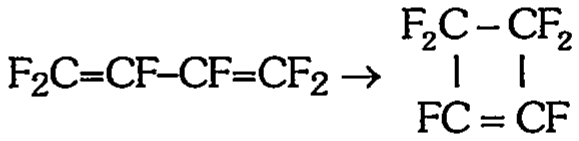
Previous-year questionFor the ring-closure reaction shown below, ΔH = −49 kJ mol⁻¹ and ΔS = −40.2 J K⁻¹ mol⁻¹. Up to what temperature does the forward reaction remain spontaneous? [NEET 2021 (Paper-2)]
- 1492 °C
- 1219 °C
- 946 °C
- 1080 °C
Show answer
Answer: (C) 946 °C
Explanation: With ΔH < 0 and ΔS < 0, the reaction is spontaneous below T = ΔH/ΔS. T = (−49000)/(−40.2) ≈ 1218.9 K. Converting to Celsius: 1218.9 − 273 ≈ 946 °C. (1219 is the value in kelvin, not °C.)
Question 3
Previous-year questionFor a reaction, ΔrH = 30 kJ mol⁻¹ at 450 K. For the reaction to be spontaneous at this temperature, ΔrS (in J K⁻¹ mol⁻¹) should be: [NEET 2020 (COVID-19)]
- 70
- −33
- 33
- −70
Show answer
Answer: (A) 70
Explanation: For spontaneity ΔG = ΔH − TΔS < 0, i.e. ΔS > ΔH/T = 30000 / 450 = 66.7 J K⁻¹ mol⁻¹. Of the given values only 70 exceeds 66.7; 33 is too small and negative values make ΔG more positive.
Question 4
Previous-year questionFor the reaction 2Cl(g) → Cl₂(g), the correct option is [NEET 2020]
- ΔᵣH > 0 and ΔᵣS < 0
- ΔᵣH 0
- ΔᵣH < 0 and ΔᵣS < 0
- ΔᵣH > 0 and ΔᵣS > 0
Show answer
Answer: (C) ΔᵣH < 0 and ΔᵣS < 0
Explanation: Forming a bond releases energy, so ΔᵣH is negative. Two moles of gaseous atoms become one mole of gaseous molecules, so the disorder falls and ΔᵣS is negative as well.
Question 5
Previous-year questionFor a given reaction, ΔH = 35.5 kJ mol⁻¹ and ΔS = 83.6 J K⁻¹ mol⁻¹. The reaction is spontaneous at (assume that ΔH and ΔS do not vary with temperature) [NEET 2017]
- T > 425 K
- All temperatures
- T > 298 K
- T < 425 K
Show answer
Answer: (A) T > 425 K
Explanation: Both ΔH and ΔS are positive, so ΔG turns negative only above the crossover temperature T = ΔH/ΔS = 35500/83.6 = 425 K. The reaction is therefore spontaneous when T > 425 K.
Question 6
Previous-year questionThe correct thermodynamic conditions for a spontaneous reaction at all temperatures is [NEET 2016]
- ΔH < 0 and ΔS = 0
- ΔH > 0 and ΔS < 0
- ΔH 0
- ΔH < 0 and ΔS < 0
Show answer
Answer: (C) ΔH 0
Explanation: With ΔH negative and ΔS positive, both terms in ΔG = ΔH − TΔS contribute negatively at every temperature, so ΔG is always negative and the reaction is spontaneous at all temperatures.
Question 7
Previous-year questionFor the reaction X₂O₄(l) → 2XO₂(g), ΔU = 2.1 kcal and ΔS = 20 cal K⁻¹ at 300 K. Hence ΔG is [AIPMT 2014]
- 2.7 kcal
- −2.7 kcal
- 9.3 kcal
- −9.3 kcal
Show answer
Answer: (B) −2.7 kcal
Explanation: Δn(g) = 2, so ΔH = ΔU + Δn(g) RT = 2100 + 2 × 2 × 300 = 3300 cal. Then ΔG = ΔH − TΔS = 3300 − 300 × 20 = 3300 − 6000 = −2700 cal = −2.7 kcal.
Doing well? Create a free account to take timed tests on this topic and see your weak areas.
Question 8
Previous-year questionFor a given reaction, ΔH = 35.5 kJ mol⁻¹ and ΔS = 83.6 J K⁻¹ mol⁻¹. The reaction is spontaneous at (assume ΔH and ΔS do not vary with temperature): [NEET 2017]
- T > 425 K
- all temperatures
- T > 298 K
- T < 425 K
Show answer
Answer: (A) T > 425 K
Explanation: ΔG ΔH/ΔS = 35500/83.6 ≈ 425 K. So the reaction is spontaneous for T > 425 K.
Question 9
Previous-year questionWhich of the following statements is correct for a reversible process in a state of equilibrium? [AIPMT 2015]
- ΔG = 2.30 RT log K
- ΔG° = –2.30 RT log K
- ΔG° = 2.30 RT log K
- ΔG = –2.30 RT log K
Show answer
Answer: (B) ΔG° = –2.30 RT log K
Explanation: The standard free energy change relates to the equilibrium constant by ΔG° = –RT ln K = –2.303 RT log K.
Question 10
Previous-year questionFor the reaction X₂O₄(l) → 2XO₂(g), ΔE = 2.1 kcal, ΔS = 20 cal K⁻¹ at 300 K. Hence ΔG is: [AIPMT 2014]
- 2.7 kcal
- –2.7 kcal
- 9.3 kcal
- –9.3 kcal
Show answer
Answer: (B) –2.7 kcal
Explanation: Δn_g = 2. ΔH = ΔE + Δn_gRT = 2100 + 2(2)(300) = 3300 cal = 3.3 kcal. ΔG = ΔH – TΔS = 3300 – 300(20) = –2700 cal = –2.7 kcal.
Question 11
Previous-year questionIn which of the following reactions is the standard reaction entropy change (ΔS°) positive and the standard Gibbs energy change (ΔG°) decreasing sharply with increasing temperature? [AIPMT Pre. 2012]
- Mg(s) + ½O₂(g) → MgO(s)
- ½C(graphite) + ½O₂(g) → ½CO₂(g)
- C(graphite) + ½O₂(g) → CO(g)
- CO(g) + ½O₂(g) → CO₂(g)
Show answer
Answer: (C) C(graphite) + ½O₂(g) → CO(g)
Explanation: For C(s) + ½O₂ → CO(g), Δn_g = 1 – ½ = +½, so ΔS° > 0. Then ΔG° = ΔH° – TΔS° decreases as temperature rises.
Question 12
Previous-year questionStandard entropies of X₂, Y₂ and XY₃ are 60, 40 and 50 Jk⁻¹ mol⁻¹, respectively. For the reaction ½X₂ + 3/2 Y₂ ⇌ XY₃, ΔH = –30 kJ, to be at equilibrium the temperature should be: [AIPMT 2010]
- 500 K
- 750 K
- 1000 K
- 1250 K
Show answer
Answer: (B) 750 K
Explanation: ΔS = 50 – [½(60) + 3/2(40)] = 50 – 90 = –40 JK⁻¹. T = ΔH/ΔS = –30000/–40 = 750 K.
Question 13
Previous-year questionFor vaporization of water at 1 atm, ΔH = 40.63 kJ mol⁻¹ and ΔS = 108.8 JK⁻¹ mol⁻¹. The temperature when the Gibbs energy change (ΔG) is zero is: [AIPMT 2010]
- 393.4 K
- 373.4 K
- 293.4 K
- 273.4 K
Show answer
Answer: (B) 373.4 K
Explanation: ΔG = 0 at T = ΔH/ΔS = 40630/108.8 = 373.4 K (the normal boiling point).
Question 14
Previous-year questionThe values of ΔH and ΔS for the reaction C(graphite) + CO₂(g) → 2CO(g) are 170 kJ and 170 JK⁻¹, respectively. This reaction will be spontaneous at: [AIPMT 2009]
- 510 K
- 710 K
- 910 K
- 1110 K
Show answer
Answer: (D) 1110 K
Explanation: ΔG ΔH/ΔS = 170000/170 = 1000 K. Only 1110 K exceeds 1000 K.
Question 15
Previous-year questionThe enthalpy and entropy change for the reaction Br₂(l) + Cl₂(g) → 2BrCl(g) are 30 kJ mol⁻¹ and 105 Jk⁻¹ mol⁻¹, respectively. The temperature at which the reaction will be in equilibrium is: [AIPMT 2006]
- 285.7 K
- 273 K
- 450 K
- 300 K
Show answer
Answer: (A) 285.7 K
Explanation: At equilibrium ΔG = 0, so T = ΔH/ΔS = 30000/105 = 285.7 K.
Want more Gibbs Free Energy and Spontaneity – Spontaneity of processes questions?
E-GYAN NIDHI has 123 questions on this topic and 63,000+ in total, all free: timed CBT tests, NEET marking and instant analysis.
Register free Free Sunday Mock Test